


What Interest Rates Today Mean for the Economy
Interest rates today represent the cost of borrowing money and the return earned on savings at the current moment in the economy. They influence how much consumers pay on mortgages, auto loans, credit cards, and business financing, and they shape decisions by families and companies. In the United States, one of the most watched indicators is the average mortgage rate, which as of early April 2026 has remained elevated in the mid-to-high 6% range for a 30-year fixed mortgage. This reflects broader economic conditions and helps illustrate how current interest rates are affecting the housing market.
These interest rates today are shaped by multiple factors including inflation, employment trends, and global events. When inflation remains persistent, central banks like the Federal Reserve may keep policy rates higher to temper price growth, which in turn keeps borrowing costs elevated for consumers. Understanding how these rates move is crucial because they affect everyday financial decisions, from buying a home to saving for the future. For example, higher mortgage rates can make monthly payments significantly more expensive, influencing whether people decide to enter the housing market now or wait for better conditions.
The Federal Reserve plays a central role in setting the direction of interest rates today through its monetary policy decisions. The key tool the Fed uses is the federal funds rate, which is the interest rate at which banks lend reserves to each other overnight. Although this rate does not directly determine mortgage rates, it influences broader financial conditions and serves as a baseline for many types of borrowing. Recently, the Fed has chosen to hold the federal funds rate steady, reflecting a cautious approach as it weighs inflation trends and labor market data.
By maintaining the federal funds rate at its current level, the Federal Reserve signals to markets that it is monitoring economic conditions closely without making abrupt changes. This approach aims to balance the need to control inflation with the desire to support economic growth. When the Fed holds rates steady, it often helps stabilize expectations for interest rates today, though market rates like mortgage yields can still fluctuate based on investor sentiment and economic news.
One of the most tangible examples of interest rates today is seen in mortgage pricing. As of early April 2026, the national average for a 30-year fixed mortgage remains around 6.50%, with 15-year fixed rates near 5.83%, according to recent financial data. These levels are high compared with the historic lows seen in the early 2020s but still below the peaks above 7% seen in previous years.
The trajectory of mortgage rates today has seen some volatility, with weekly data showing rates moving up and down as economic and geopolitical developments unfold. For instance, reports from late March indicated mortgage rates climbing above 6.5% after dipping briefly below 6% earlier in the year, illustrating how quickly market conditions can shift. These changes underscore how broader financial markets, including Treasury yields and investor expectations, influence borrowing costs even when central bank policy remains unchanged.
Interest rates today have a direct impact on homebuyers’ budgets and decisions. When mortgage rates rise, the cost of financing a home increases, leading to higher monthly payments for the same loan amount. This can make housing less affordable for many buyers and may lead some to delay purchasing until rates improve. Homebuyers often watch current mortgage rates closely to time their entry into the market and to compare loan options from different lenders.
In addition, the decision to refinance an existing mortgage is heavily influenced by interest rates today. Homeowners may choose to refinance if they can secure a lower rate than their current mortgage, reducing monthly payments and long-term interest costs. However, refinancing comes with its own costs and requires careful financial planning. Because mortgage rates have remained elevated in 2026 compared to earlier periods, many borrowers are weighing the benefits of refinancing against the expenses and personal financial goals.
How Broader Economic Conditions Shape Interest Rates
Interest rates today do not exist in isolation; they are deeply connected to broader economic conditions such as inflation, employment, and global events. Persistent inflation pressures can lead central banks to maintain higher policy rates, which then filter through to market rates like mortgages and personal loans. In the current environment, ongoing inflation concerns and geopolitical uncertainties have contributed to a cautious stance from policymakers.
Labor market strength also plays a role in shaping interest rate trends. When job growth remains robust, consumer spending tends to stay strong, which can add to inflationary pressures. Conversely, slowing job growth can ease some of those pressures, giving central banks room to adjust rates. In 2026, mixed signals from employment data have made the outlook for future rate changes more uncertain, prompting both consumers and financial professionals to monitor economic releases closely.
Forecasts and Expectations for Future Rates
Looking ahead, many economists and market analysts provide forecasts that help shape expectations for interest rates today and in the months to come. Some projections suggest that mortgage rates may gradually decline if inflation eases and economic growth slows. For example, forecasts shared by financial commentators indicate that average mortgage rates could dip below the current mid-6% range later in 2026, potentially easing borrowing costs for homebuyers.
However, these forecasts come with caveats. The potential for rate declines depends on multiple factors including inflation trends, Federal Reserve policy decisions, and broader economic performance. While some analysts see room for modest rate decreases, others caution that global uncertainties and persistent price pressures could keep interest rates elevated for longer. As a result, consumers and businesses alike remain attentive to economic data and central bank communications when planning for future financial decisions.
Practical Advice for Navigating Interest Rates Today
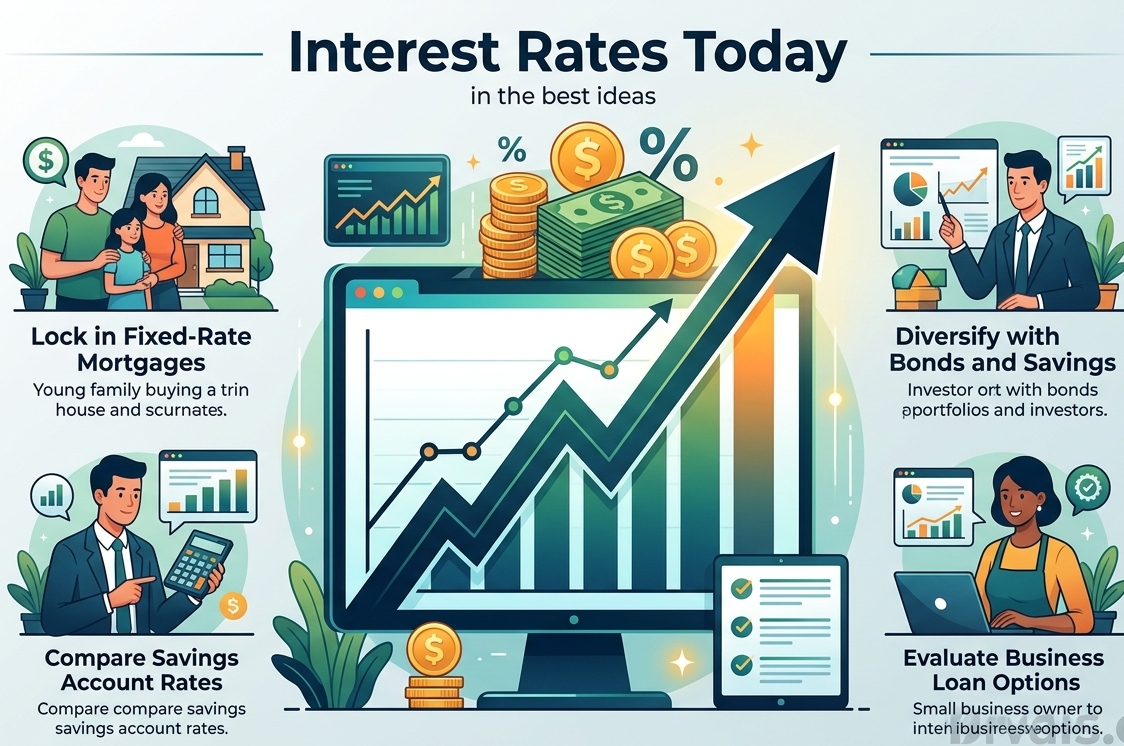
For individuals navigating interest rates today, staying informed and proactive is essential. Homebuyers should shop around for mortgage offers, compare interest rates from different lenders, and consider how rate changes may affect monthly payments and long-term affordability. Understanding credit scores and loan terms can also help borrowers secure more favorable rates.
Savers and investors can benefit from monitoring how interest rate trends influence returns on savings accounts and fixed-income investments. In periods of higher interest rates, savings products like certificates of deposit may offer more attractive yields. Meanwhile, diversified investment strategies can help manage risks associated with fluctuating interest rates and economic conditions. By combining careful research with sound financial planning, individuals can make decisions that align with both short-term needs and long-term goals.
