


Introduction
The term mediate is widely used in communication, law, psychology, and everyday life. At its core, it refers to the process of helping two or more sides resolve a disagreement or reach a common understanding. In today’s fast-paced world, where conflicts can arise easily, learning how to mediate effectively has become an essential skill.
Understanding what it means to mediate can help individuals improve relationships, solve problems, and communicate better. Whether it is a workplace conflict, a family disagreement, or an international issue, mediation plays a key role in creating balance and cooperation.
What Does Mediate Mean?
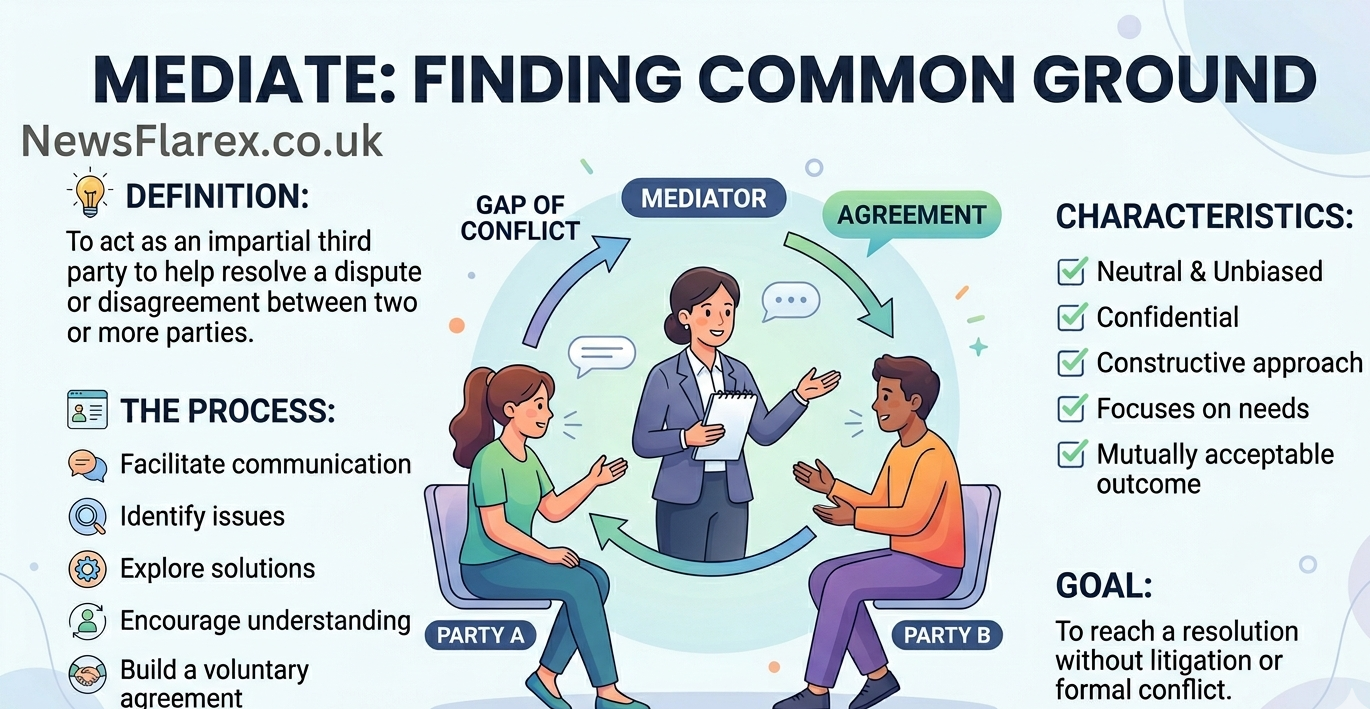
To mediate means to act as a middle person between two or more parties who are in conflict. The goal is to help them communicate, understand each other, and reach a solution that works for everyone involved. (Cambridge Dictionary)
In simple terms, when someone chooses to mediate, they step in to reduce tension and guide both sides toward agreement. This process is often neutral, meaning the mediator does not take sides but focuses on fairness and resolution.
The Importance of Mediation in Daily Life
The ability to mediate is not limited to formal situations. It is something people use in everyday life without even realizing it. Friends, family members, and colleagues often step in to help resolve misunderstandings.
When you mediate effectively, you create an environment where people feel heard and respected. This not only solves the current issue but also strengthens relationships in the long term. It builds trust and encourages open communication.
How Mediate Works in Conflict Resolution
To mediate a conflict, a person must first understand the perspectives of all parties involved. This requires active listening and patience. By allowing each side to express their concerns, the mediator helps reduce emotional tension.
The next step is guiding the conversation toward a solution. Instead of forcing a decision, the mediator encourages both sides to find common ground. This approach leads to more lasting and meaningful resolutions.
Skills Required to Mediate Effectively
Learning how to mediate successfully involves developing several important skills. Communication is one of the most important, as it allows the mediator to clearly understand and explain different viewpoints.
Another key skill is emotional intelligence. A good mediator can recognize feelings, manage emotions, and create a calm environment. These abilities help ensure that discussions remain productive rather than turning into arguments.
Mediate in Legal and Professional Settings
In legal and business environments, the role to mediate becomes more structured and formal. Professional mediators are often trained to handle complex disputes, such as contract disagreements or workplace conflicts.
Mediation is often preferred over court cases because it saves time, reduces costs, and allows both parties to have control over the outcome. This makes it a valuable tool in modern legal systems.
Psychological and Social Aspects of Mediate
The concept of mediate is also important in psychology. It can refer to how certain factors influence relationships between different variables or behaviors. (Encyclopedia Britannica)
From a social perspective, mediation helps maintain harmony within communities. It allows people to resolve issues peacefully and promotes understanding between different groups.
Benefits of Choosing to Mediate
Choosing to mediate rather than argue or avoid conflict has many benefits. It helps reduce stress and creates a more positive environment for communication.
Mediation also leads to solutions that are mutually acceptable. Instead of one side winning and the other losing, both parties feel satisfied with the outcome, which helps prevent future conflicts.
Challenges in the Mediation Process
While the ability to mediate is valuable, it is not always easy. Some conflicts involve strong emotions or deeply rooted issues, which can make resolution more difficult.
In such cases, the mediator must remain patient and neutral. Overcoming these challenges requires experience, understanding, and the ability to manage complex situations without bias.
Future Relevance of Mediate in Modern Society
As society becomes more connected, the need to mediate conflicts continues to grow. From workplace environments to international relations, mediation is becoming an essential tool for maintaining peace and cooperation.
The increasing focus on communication and emotional intelligence highlights the importance of mediation skills. In the future, more people are likely to learn how to mediate as part of personal and professional development.
Conclusion
The concept of mediate is more than just resolving disagreements; it is about building understanding and creating solutions that benefit everyone involved. It plays a crucial role in personal relationships, professional environments, and even global affairs.
By learning how to mediate effectively, individuals can improve communication, reduce conflict, and create stronger connections. In a world where misunderstandings are common, mediation remains a powerful and valuable skill.
