


Introduction
Understanding the difference between psoriasis vs eczema is essential for anyone dealing with chronic skin conditions. Although both conditions can cause redness, itching, and irritation, they are fundamentally different in terms of causes, symptoms, and treatment approaches. Many people often confuse the two, which can lead to improper care and prolonged discomfort.
The topic of psoriasis vs eczema has gained increasing attention as more individuals seek accurate information about skin health. With proper knowledge, it becomes easier to identify symptoms early and choose the right treatment path. This article provides a clear, detailed, and trustworthy explanation to help you better understand these two conditions.
What Is Psoriasis?
Psoriasis is a chronic autoimmune condition that speeds up the life cycle of skin cells. This rapid turnover leads to the buildup of thick, scaly patches on the skin. These patches often appear on the elbows, knees, scalp, and lower back, and they may cause discomfort or itching.
When discussing psoriasis vs eczema, it is important to note that psoriasis is driven by the immune system rather than external triggers alone. The condition tends to flare up in cycles, often influenced by stress, infections, or environmental factors, making long-term management essential.
What Is Eczema?
Eczema, also known as atopic dermatitis, is a condition that causes inflamed, itchy, and sometimes cracked skin. It is commonly seen in children but can affect people of all ages. The skin may appear red, dry, and sensitive, especially in areas like the hands, face, and inside the elbows.
In the context of psoriasis vs eczema, eczema is typically linked to a weakened skin barrier and heightened sensitivity to irritants. Unlike psoriasis, it is often triggered by allergens, weather changes, or harsh skincare products, making avoidance strategies a key part of treatment.
Psoriasis vs Eczema: Key Differences in Symptoms
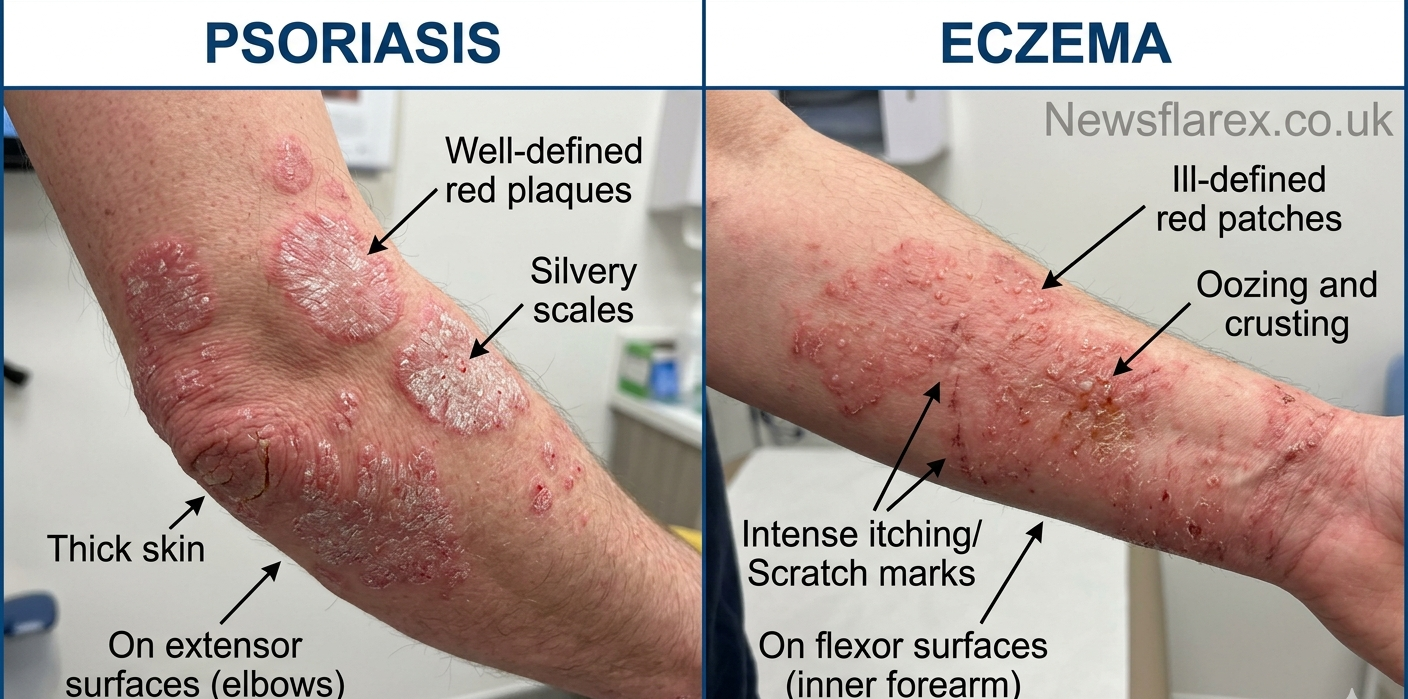
When comparing psoriasis vs eczema, the symptoms may look similar at first glance but differ significantly upon closer inspection. Psoriasis usually presents as thick, silvery scales on well-defined patches of skin, while eczema tends to appear as red, inflamed areas that may ooze or crust.
Another important difference in psoriasis vs eczema lies in the intensity of itching. Eczema is often associated with intense itching that can disrupt daily life, whereas psoriasis may cause mild to moderate itching along with a burning sensation. Recognizing these differences can help in identifying the correct condition.
Causes Behind Psoriasis and Eczema
The causes of these conditions highlight another major distinction in psoriasis vs eczema. Psoriasis is primarily caused by an overactive immune system that triggers rapid skin cell production. Genetic factors also play a significant role, making it more likely to occur in individuals with a family history.
On the other hand, eczema is usually linked to a combination of genetic and environmental factors. In psoriasis vs eczema, eczema is more closely associated with allergens, irritants, and a compromised skin barrier. This makes lifestyle adjustments particularly important for managing eczema symptoms.
Areas of the Body Affected
The location of symptoms is another useful way to understand psoriasis vs eczema. Psoriasis often affects the scalp, elbows, knees, and lower back, appearing in symmetrical patterns on the body. These areas tend to develop thick, raised plaques.
In contrast, eczema commonly appears in skin folds such as the inner elbows, behind the knees, and around the neck. When analyzing psoriasis vs eczema, these location patterns can provide valuable clues for diagnosis and help guide treatment decisions.
Diagnosis and Medical Evaluation
Diagnosing these conditions requires careful evaluation by a healthcare professional. In the discussion of psoriasis vs eczema, doctors typically examine the skin and review medical history to determine the condition. In some cases, a skin biopsy may be performed for confirmation.
Accurate diagnosis is crucial in psoriasis vs eczema because the treatments differ significantly. Misdiagnosis can lead to ineffective treatment and worsening symptoms, making professional guidance essential for proper care.
Treatment Options for Psoriasis and Eczema
Treatment approaches vary widely in psoriasis vs eczema due to their different underlying causes. Psoriasis treatments often include topical medications, light therapy, and systemic treatments that target the immune system.
Eczema treatment focuses more on restoring the skin barrier and reducing inflammation. In psoriasis vs eczema, moisturizers, topical steroids, and avoiding triggers play a central role in managing eczema effectively. Personalized treatment plans are often necessary for both conditions.
Lifestyle and Trigger Management
Managing triggers is an important part of dealing with psoriasis vs eczema. For psoriasis, stress management, maintaining a healthy lifestyle, and avoiding infections can help reduce flare-ups. Consistency in treatment is also key.
For eczema, identifying and avoiding irritants such as certain fabrics, soaps, or foods can make a significant difference. In the broader discussion of psoriasis vs eczema, lifestyle changes often complement medical treatments and improve overall skin health.
Long-Term Outlook and Living with the Conditions
Living with chronic skin conditions can be challenging, and understanding psoriasis vs eczema helps individuals manage expectations. Both conditions tend to have periods of flare-ups and remission, requiring ongoing care and attention.
With proper management, people with either condition can lead comfortable lives. In psoriasis vs eczema, awareness, early treatment, and consistent care are essential for minimizing symptoms and improving quality of life.
Conclusion
The comparison of psoriasis vs eczema highlights the importance of understanding their differences in symptoms, causes, and treatment. While they may appear similar, each condition requires a unique approach to care and management.
By gaining a clear understanding of psoriasis vs eczema, individuals can take informed steps toward better skin health. Consulting healthcare professionals and following appropriate treatments can lead to improved comfort and long-term well-being.
For more detailed medical information, you can visit this trusted health resource.
